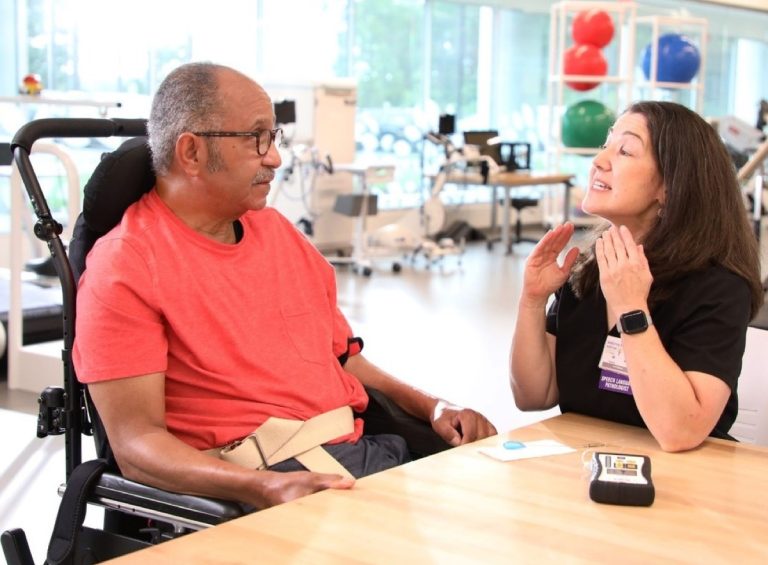
Speech Therapy After a Stroke: What Patients and Families Should Know
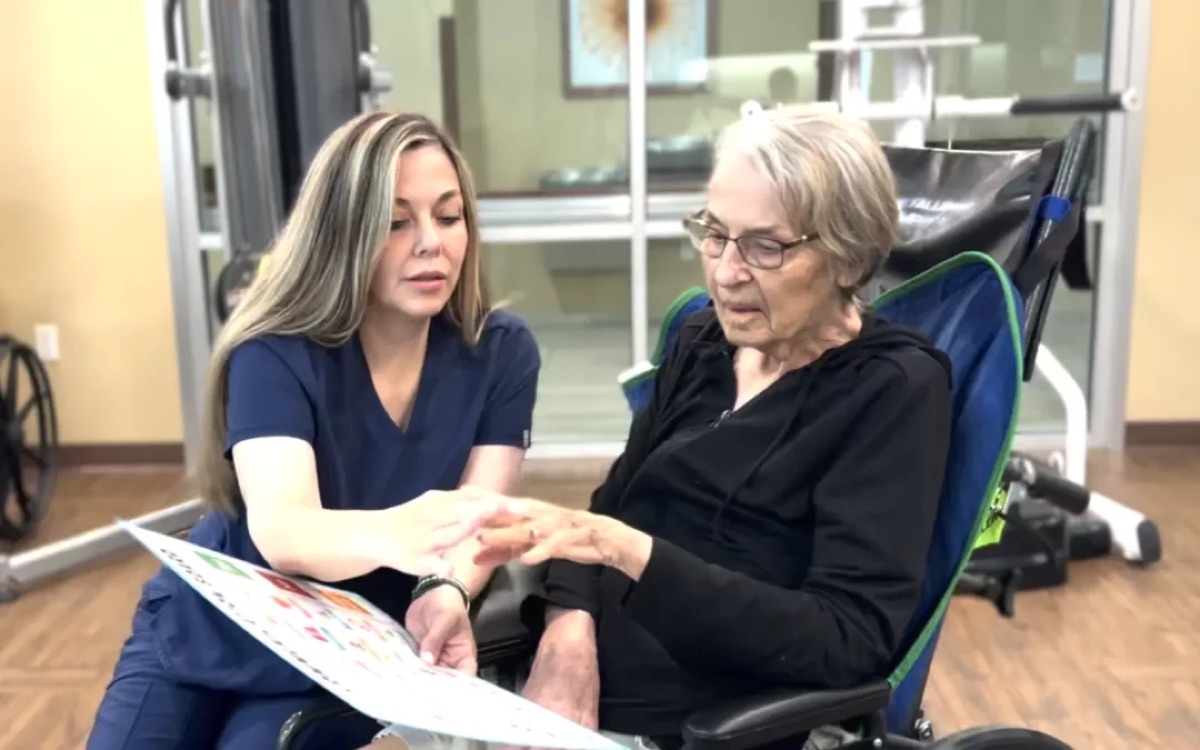
A stroke can change communication suddenly and completely. The good news, which is often not communicated clearly at discharge, is that these difficulties are treatable, and that improvement is possible well beyond the first few months.
What can change after a stroke
Aphasia
Aphasia is difficulty with language caused by damage to the language areas of the brain. It can affect speaking, understanding, reading, and writing in any combination.
The single most important thing for families to understand: aphasia is not a loss of intelligence. The person’s thoughts, memories, personality, and judgment are intact. The difficulty is getting language in and out. Being spoken to as though they cannot think is one of the most isolating parts of the condition.
Patterns vary. Some people understand well but produce speech slowly and effortfully. Others speak fluently but with words that do not carry the meaning intended, and may not immediately recognize the problem. Many sit somewhere between.
Apraxia of speech
Difficulty planning and sequencing the movements for speech. The person knows the word and the muscles work, but the message from brain to mouth does not arrive intact. Speech may be effortful and inconsistent.
Dysarthria
Weakness or poor coordination of the speech muscles, producing slurred, quiet, or imprecise speech. The language system is intact. The delivery is affected.
Cognitive-communication difficulty
Changes in attention, memory, or organization that affect conversation: losing the thread, difficulty following a group, trouble organizing a story.
Dysphagia
Swallowing difficulty is common after stroke and carries real risk, including aspiration pneumonia. SLPs assess swallowing and recommend strategies, exercises, and diet modifications.
What an SLP does
Therapy begins with a thorough evaluation of language, speech, cognition, and often swallowing, then targets goals that matter to the person’s actual life. Depending on the profile, that may include restoring access to words, strengthening or compensating for weakened muscles, rebuilding conversation strategies, training communication partners, and introducing supportive tools, from a notebook to a speech-generating device.
On timing and the “plateau”
Families are often told recovery happens in the first six months and plateaus after. Spontaneous recovery is indeed fastest early, and starting early matters. But a plateau in spontaneous recovery is not the end of possible improvement. Research on intensive aphasia therapy documents meaningful gains years post-stroke. If someone was discharged with “this is as good as it gets,” a second opinion is reasonable.
For families and care partners
How you communicate changes how well the person with aphasia can:
- Allow time. Do not finish their sentences unless asked.
- Speak naturally, not loudly. Aphasia is not hearing loss. Simplify sentences, keep an adult tone.
- Use every channel. Writing key words, gesturing, drawing, pointing to a photo.
- Ask yes/no questions when open questions stall.
- Cut background noise. Turn the television off before a conversation.
- Confirm understanding. “Did I get that right?”
- Keep including them. Withdrawal from conversation is one of the bigger costs of aphasia.
Where to start
If you or a family member is living with communication changes after a stroke, whether it happened last month or five years ago, an evaluation will tell you what is still worth working on. Related reading: speech therapy for adults.
Virtual Speech Solutions provides adult neurological speech therapy at our Murrieta clinic and via teletherapy across California, serving Temecula, Menifee, and Southwest Riverside County. Contact us or call (951) 223-5435.