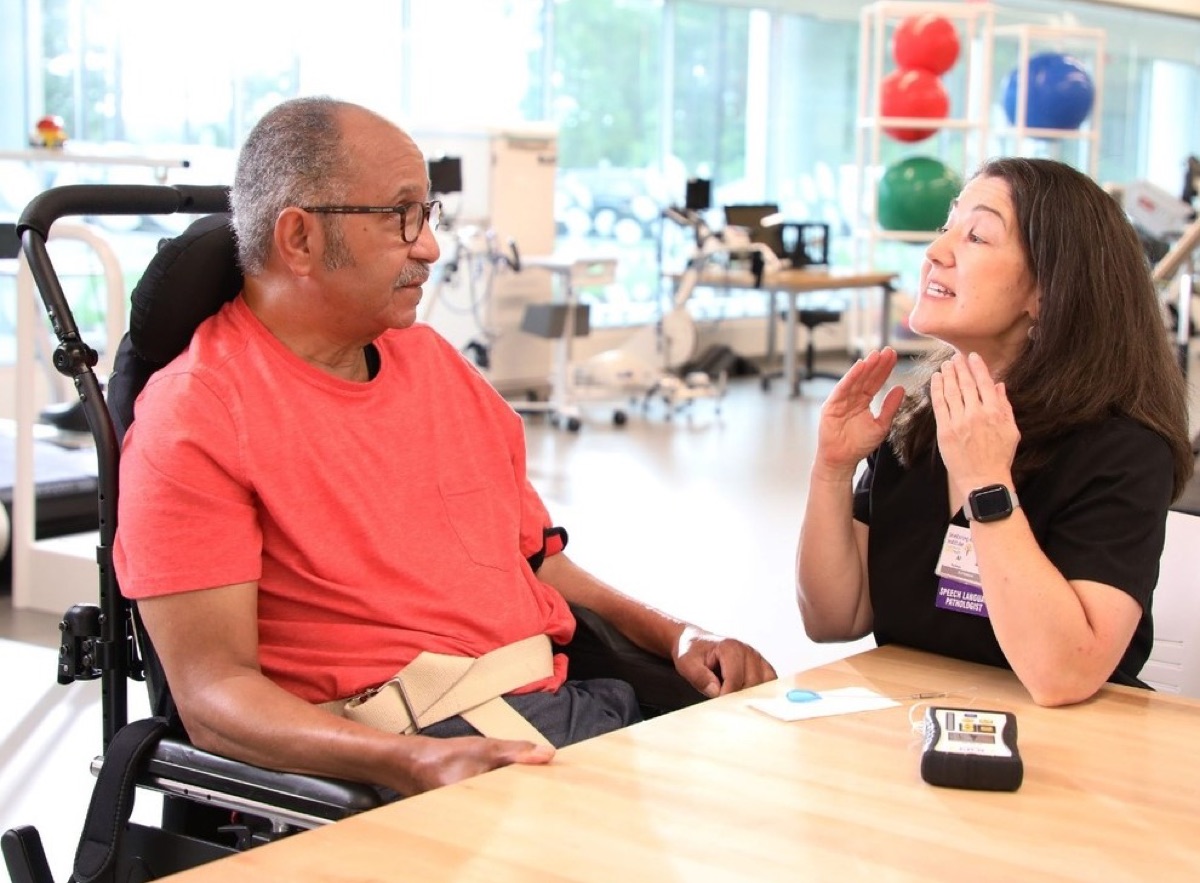
Speech Therapy for Parkinson’s: How SPEAK OUT!® Can Help

Parkinson’s disease is usually described in terms of movement: tremor, stiffness, slowness. Speech and voice are affected in the large majority of people with Parkinson’s too, and that part is frequently addressed late, if at all.

How Parkinson’s affects communication

The same processes that make movement smaller and slower affect the muscles used for speech. Common changes include:

  • Reduced volume. The voice becomes quiet, often without the speaker noticing.
  • Monotone delivery. Less pitch variation, which flattens emotional expression.
  • Hoarse or breathy quality.
  • Imprecise articulation, making speech harder to follow.
  • Rate changes: sometimes rushing, sometimes hesitating.
  • Reduced facial expression, which listeners read as disengagement.
  • Swallowing difficulty, which carries medical risk and warrants assessment.

There is a particular cruelty in the volume change: the internal calibration shifts, so speech that sounds normal from the inside is barely audible from across the room. People are told constantly that they are mumbling, which is both inaccurate and demoralizing. The withdrawal that follows is often the real cost: declining phone calls, going quiet in groups, letting a spouse speak for them.

Why standard advice does not hold

“Speak up” fails because it treats this as a volume knob. In Parkinson’s, speech shifts from an automatic process to one that needs deliberate effort, and the internal feedback that tells you how loud you are has drifted. Effective treatment retrains both: producing adequate voice, and recalibrating the perception of it.

What SPEAK OUT!® is

SPEAK OUT!® is a therapy program developed by Parkinson Voice Project specifically for people with Parkinson’s. Its central principle is teaching participants to speak with intent: converting speech from an automatic activity into a deliberate one, which is more resistant to the effects of the disease.

The program typically involves a course of individual sessions with a trained SLP, working through structured speech, voice, and cognitive exercises with a workbook, and daily home practice. Participants generally then move into an ongoing group maintenance component, which is a large part of why gains hold: Parkinson’s is progressive, and maintenance matters as much as the initial course.

When to start

Earlier than most people do. There is a tendency to wait until speech is clearly a problem, but starting while the voice is still relatively strong means building habits and reserve before they are urgently needed. If you have a Parkinson’s diagnosis and have not had a speech evaluation, that is worth arranging regardless of how your voice sounds today.

Swallowing is worth assessing at the same time, whether or not you have noticed difficulty. Changes often begin before they are obvious.

What families notice

Care partners frequently report that the practical change is not just audibility but participation: rejoining conversations, using the phone again, being understood the first time. Those are reasonable things to set as goals.

Getting started

Virtual Speech Solutions offers SPEAK OUT!-based therapy for people with Parkinson’s, along with broader adult speech therapy, at our Murrieta clinic and via teletherapy throughout California, serving Temecula, Menifee, and Southwest Riverside County.

To arrange an evaluation, contact us or call (951) 223-5435. More about our clinic services.
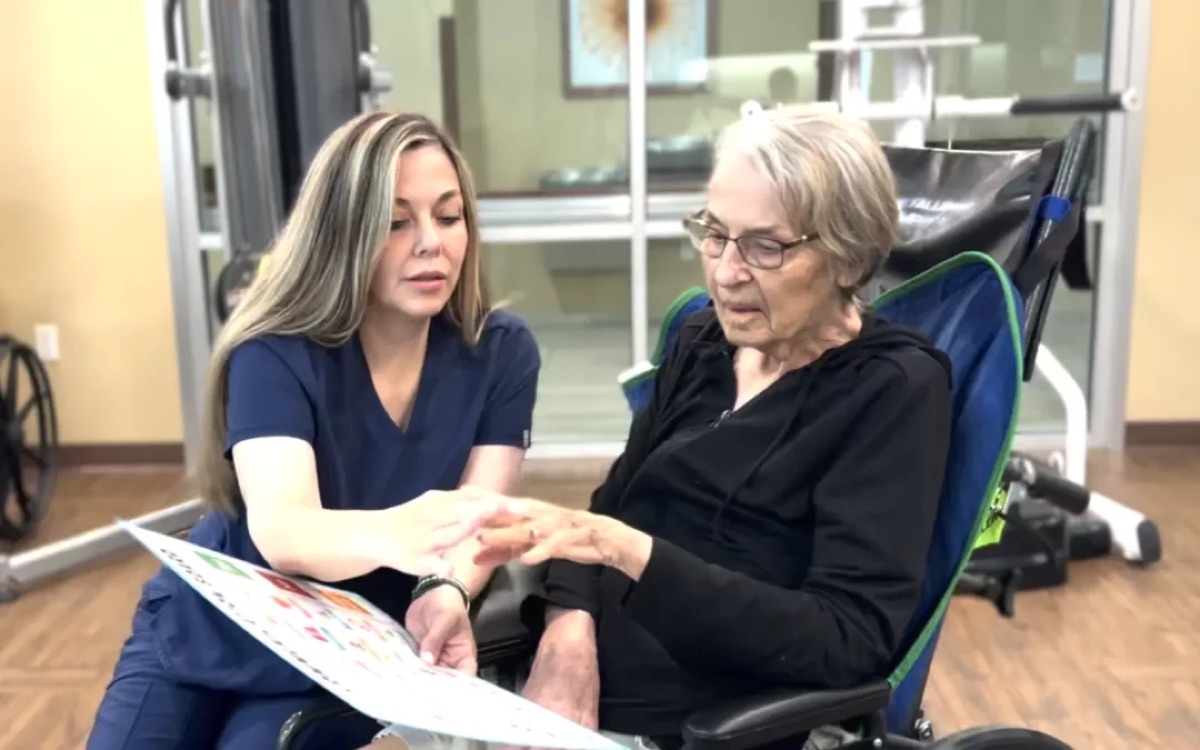
Speech Therapy After a Stroke: What Patients and Families Should Know

A stroke can change communication suddenly and completely. The good news, which is often not communicated clearly at discharge, is that these difficulties are treatable, and that improvement is possible well beyond the first few months.

What can change after a stroke

Aphasia

Aphasia is difficulty with language caused by damage to the language areas of the brain. It can affect speaking, understanding, reading, and writing in any combination.

The single most important thing for families to understand: aphasia is not a loss of intelligence. The person’s thoughts, memories, personality, and judgment are intact. The difficulty is getting language in and out. Being spoken to as though they cannot think is one of the most isolating parts of the condition.

Patterns vary. Some people understand well but produce speech slowly and effortfully. Others speak fluently but with words that do not carry the meaning intended, and may not immediately recognize the problem. Many sit somewhere between.

Apraxia of speech

Difficulty planning and sequencing the movements for speech. The person knows the word and the muscles work, but the message from brain to mouth does not arrive intact. Speech may be effortful and inconsistent.

Dysarthria

Weakness or poor coordination of the speech muscles, producing slurred, quiet, or imprecise speech. The language system is intact. The delivery is affected.

Cognitive-communication difficulty

Changes in attention, memory, or organization that affect conversation: losing the thread, difficulty following a group, trouble organizing a story.

Dysphagia

Swallowing difficulty is common after stroke and carries real risk, including aspiration pneumonia. SLPs assess swallowing and recommend strategies, exercises, and diet modifications.

What an SLP does

Therapy begins with a thorough evaluation of language, speech, cognition, and often swallowing, then targets goals that matter to the person’s actual life. Depending on the profile, that may include restoring access to words, strengthening or compensating for weakened muscles, rebuilding conversation strategies, training communication partners, and introducing supportive tools, from a notebook to a speech-generating device.

On timing and the “plateau”

Families are often told recovery happens in the first six months and plateaus after. Spontaneous recovery is indeed fastest early, and starting early matters. But a plateau in spontaneous recovery is not the end of possible improvement. Research on intensive aphasia therapy documents meaningful gains years post-stroke. If someone was discharged with “this is as good as it gets,” a second opinion is reasonable.

For families and care partners

How you communicate changes how well the person with aphasia can:

  • Allow time. Do not finish their sentences unless asked.
  • Speak naturally, not loudly. Aphasia is not hearing loss. Simplify sentences, keep an adult tone.
  • Use every channel. Writing key words, gesturing, drawing, pointing to a photo.
  • Ask yes/no questions when open questions stall.
  • Cut background noise. Turn the television off before a conversation.
  • Confirm understanding. “Did I get that right?”
  • Keep including them. Withdrawal from conversation is one of the bigger costs of aphasia.

Where to start

If you or a family member is living with communication changes after a stroke, whether it happened last month or five years ago, an evaluation will tell you what is still worth working on. Related reading: speech therapy for adults.

Virtual Speech Solutions provides adult neurological speech therapy at our Murrieta clinic and via teletherapy across California, serving Temecula, Menifee, and Southwest Riverside County. Contact us or call (951) 223-5435.

Speech Therapy for Adults: It’s Not Just for Kids

Say “speech therapy” and most people picture a child working on their r sound. That picture leaves out a large share of the people who benefit most. Speech-language pathologists treat adults across a wide range of conditions, and many adults who would benefit never find out it is an option.

What adult speech therapy addresses

Communication after neurological events

Stroke, traumatic brain injury, and brain tumors can affect language, speech clarity, and cognition. Aphasia (difficulty producing or understanding language while thinking remains intact) is one of the most common and most treatable. We cover it in detail in speech therapy after a stroke.

Progressive neurological conditions

Parkinson’s disease, multiple sclerosis, ALS, and related conditions commonly affect voice, speech clarity, and swallowing. Therapy focuses on maintaining function and adapting as things change. For Parkinson’s specifically, see how SPEAK OUT! can help.

Cognitive-communication difficulty

Attention, memory, organization, and problem-solving all shape communication. After a brain injury, or alongside a progressive condition, an SLP works on practical strategies: external memory systems, structured routines, compensations that hold up in real life.

Voice

Hoarseness, vocal fatigue, loss of range, or strain, whether from nodules, vocal fold paralysis, reflux, or heavy voice use in teaching or sales. Voice therapy is often the first-line treatment, sometimes avoiding surgery.

Swallowing (dysphagia)

Difficulty swallowing can follow stroke, head and neck cancer treatment, or progressive disease, and carries real risk: malnutrition, dehydration, and aspiration pneumonia. SLPs assess swallowing and provide exercises, strategies, and diet guidance.

Fluency and lifelong stuttering

Adults who stutter can benefit at any age. The focus often shifts from fluency itself toward communication confidence and reducing avoidance.

Accent modification and professional communication

Elective, not clinical. This is for adults who want to be understood more easily at work. No disorder involved.

Why adults wait

A few reasons come up repeatedly, and each is worth naming.

“No one told me this existed.” Referral patterns are inconsistent. Many adults are discharged from hospital or rehab without anyone mentioning outpatient speech therapy.

“It’s been too long.” The idea that recovery stops at six months is outdated. Meaningful gains are documented years after a stroke, and the adult brain remains capable of reorganizing with targeted practice.

“It’s just aging.” Some change is normal. Significant difficulty finding words, a voice that keeps failing, or coughing during meals are not simply age, and they are often treatable.

What therapy looks like

It starts with an evaluation targeted at your specific concern, followed by goals you actually care about: returning to work, following a conversation at a family dinner, being understood on the phone, eating safely. Sessions are typically weekly, with practice between them. Adult therapy is collaborative in a way pediatric therapy cannot be: you define what success means.

Teletherapy suits much of this work well, which matters when driving is not currently an option. See online vs. in-person therapy.

Start with a conversation

Virtual Speech Solutions treats adults at our Murrieta clinic and via teletherapy across California, serving Temecula, Menifee, and Southwest Riverside County. If something here sounds familiar, for you or for someone you care for, contact us or call (951) 223-5435. More on our clinic services for children and adults.

Request an Appointment

Private Practice: for families and individuals.

    “Please do not include medical, diagnostic, or other sensitive health information in this form. Our team will contact you to complete the appropriate intake paperwork securely.”

      “Please do not include medical, diagnostic, or other sensitive health information in this form. Our team will contact you to complete the appropriate intake paperwork securely.”

        “Please do not include medical, diagnostic, or other sensitive health information in this form. Our team will contact you to complete the appropriate intake paperwork securely.”

        Partner With VSS

        Contracting & Staffing: for schools and districts.

          “Please do not include medical, diagnostic, or other sensitive health information in this form. Our team will contact you to complete the appropriate intake paperwork securely.”

            “Please do not include medical, diagnostic, or other sensitive health information in this form. Our team will contact you to complete the appropriate intake paperwork securely.”


              “Please do not include medical, diagnostic, or other sensitive health information in this form. Our team will contact you to complete the appropriate intake paperwork securely.”