Speech Therapy for Parkinson’s: How SPEAK OUT!® Can Help

Parkinson’s disease is usually described in terms of movement: tremor, stiffness, slowness. Speech and voice are affected in the large majority of people with Parkinson’s too, and that part is frequently addressed late, if at all.

How Parkinson’s affects communication

The same processes that make movement smaller and slower affect the muscles used for speech. Common changes include:

  • Reduced volume. The voice becomes quiet, often without the speaker noticing.
  • Monotone delivery. Less pitch variation, which flattens emotional expression.
  • Hoarse or breathy quality.
  • Imprecise articulation, making speech harder to follow.
  • Rate changes: sometimes rushing, sometimes hesitating.
  • Reduced facial expression, which listeners read as disengagement.
  • Swallowing difficulty, which carries medical risk and warrants assessment.

There is a particular cruelty in the volume change: the internal calibration shifts, so speech that sounds normal from the inside is barely audible from across the room. People are told constantly that they are mumbling, which is both inaccurate and demoralizing. The withdrawal that follows is often the real cost: declining phone calls, going quiet in groups, letting a spouse speak for them.

Why standard advice does not hold

“Speak up” fails because it treats this as a volume knob. In Parkinson’s, speech shifts from an automatic process to one that needs deliberate effort, and the internal feedback that tells you how loud you are has drifted. Effective treatment retrains both: producing adequate voice, and recalibrating the perception of it.

What SPEAK OUT!® is

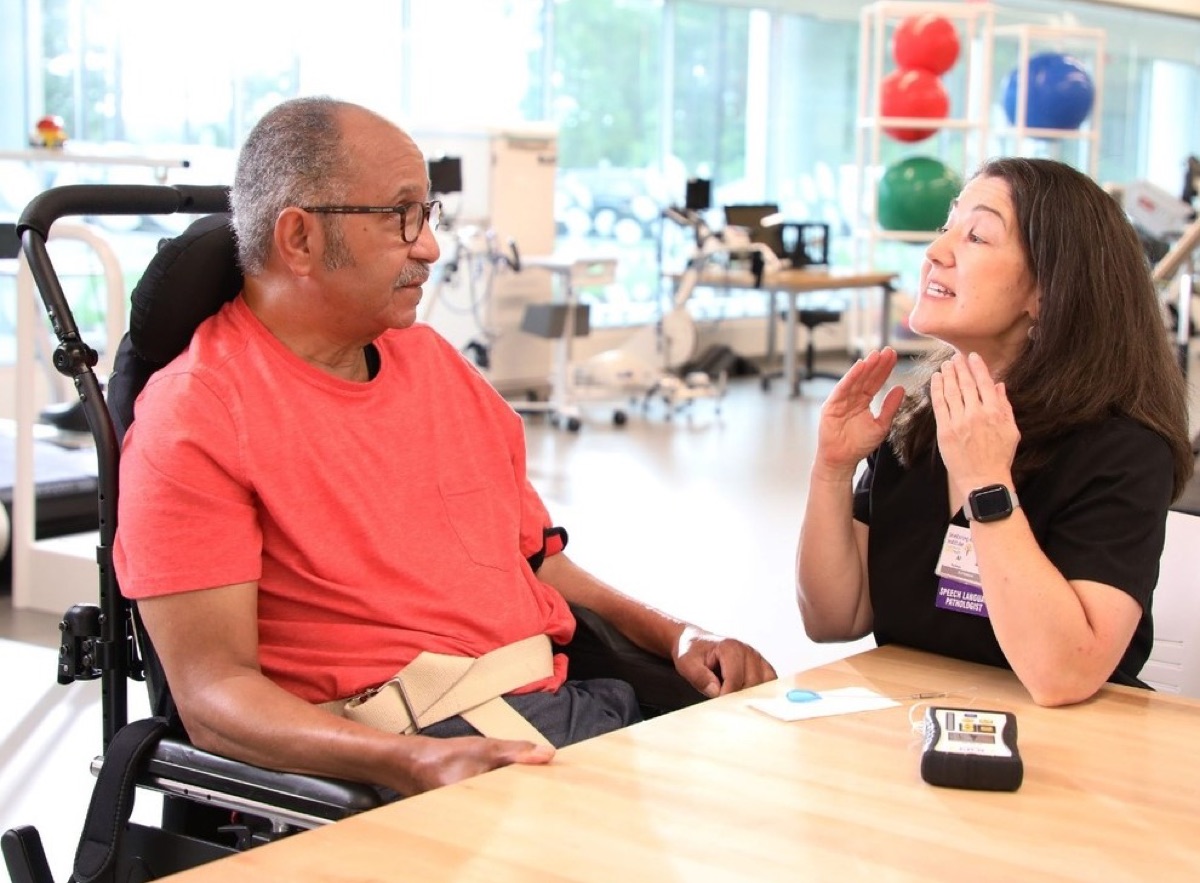
SPEAK OUT!® is a therapy program developed by Parkinson Voice Project specifically for people with Parkinson’s. Its central principle is teaching participants to speak with intent: converting speech from an automatic activity into a deliberate one, which is more resistant to the effects of the disease.

The program typically involves a course of individual sessions with a trained SLP, working through structured speech, voice, and cognitive exercises with a workbook, and daily home practice. Participants generally then move into an ongoing group maintenance component, which is a large part of why gains hold: Parkinson’s is progressive, and maintenance matters as much as the initial course.

When to start

Earlier than most people do. There is a tendency to wait until speech is clearly a problem, but starting while the voice is still relatively strong means building habits and reserve before they are urgently needed. If you have a Parkinson’s diagnosis and have not had a speech evaluation, that is worth arranging regardless of how your voice sounds today.

Swallowing is worth assessing at the same time, whether or not you have noticed difficulty. Changes often begin before they are obvious.

What families notice

Care partners frequently report that the practical change is not just audibility but participation: rejoining conversations, using the phone again, being understood the first time. Those are reasonable things to set as goals.

Getting started

Virtual Speech Solutions offers SPEAK OUT!-based therapy for people with Parkinson’s, along with broader adult speech therapy, at our Murrieta clinic and via teletherapy throughout California, serving Temecula, Menifee, and Southwest Riverside County.

To arrange an evaluation, contact us or call (951) 223-5435. More about our clinic services.
Speech Therapy After a Stroke: What Patients and Families Should Know

A stroke can change communication suddenly and completely. The good news, which is often not communicated clearly at discharge, is that these difficulties are treatable, and that improvement is possible well beyond the first few months.

What can change after a stroke

Aphasia

Aphasia is difficulty with language caused by damage to the language areas of the brain. It can affect speaking, understanding, reading, and writing in any combination.

The single most important thing for families to understand: aphasia is not a loss of intelligence. The person’s thoughts, memories, personality, and judgment are intact. The difficulty is getting language in and out. Being spoken to as though they cannot think is one of the most isolating parts of the condition.

Patterns vary. Some people understand well but produce speech slowly and effortfully. Others speak fluently but with words that do not carry the meaning intended, and may not immediately recognize the problem. Many sit somewhere between.

Apraxia of speech

Difficulty planning and sequencing the movements for speech. The person knows the word and the muscles work, but the message from brain to mouth does not arrive intact. Speech may be effortful and inconsistent.

Dysarthria

Weakness or poor coordination of the speech muscles, producing slurred, quiet, or imprecise speech. The language system is intact. The delivery is affected.

Cognitive-communication difficulty

Changes in attention, memory, or organization that affect conversation: losing the thread, difficulty following a group, trouble organizing a story.

Dysphagia

Swallowing difficulty is common after stroke and carries real risk, including aspiration pneumonia. SLPs assess swallowing and recommend strategies, exercises, and diet modifications.

What an SLP does

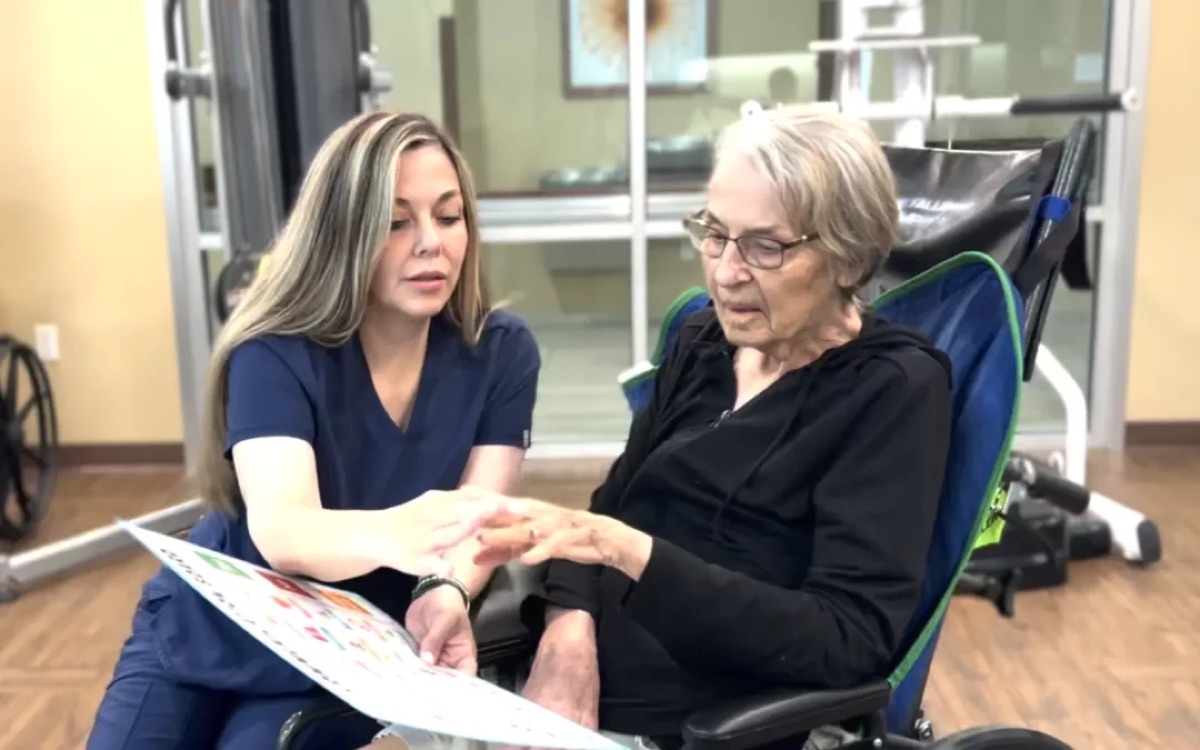
Therapy begins with a thorough evaluation of language, speech, cognition, and often swallowing, then targets goals that matter to the person’s actual life. Depending on the profile, that may include restoring access to words, strengthening or compensating for weakened muscles, rebuilding conversation strategies, training communication partners, and introducing supportive tools, from a notebook to a speech-generating device.

On timing and the “plateau”

Families are often told recovery happens in the first six months and plateaus after. Spontaneous recovery is indeed fastest early, and starting early matters. But a plateau in spontaneous recovery is not the end of possible improvement. Research on intensive aphasia therapy documents meaningful gains years post-stroke. If someone was discharged with “this is as good as it gets,” a second opinion is reasonable.

For families and care partners

How you communicate changes how well the person with aphasia can:

  • Allow time. Do not finish their sentences unless asked.
  • Speak naturally, not loudly. Aphasia is not hearing loss. Simplify sentences, keep an adult tone.
  • Use every channel. Writing key words, gesturing, drawing, pointing to a photo.
  • Ask yes/no questions when open questions stall.
  • Cut background noise. Turn the television off before a conversation.
  • Confirm understanding. “Did I get that right?”
  • Keep including them. Withdrawal from conversation is one of the bigger costs of aphasia.

Where to start

If you or a family member is living with communication changes after a stroke, whether it happened last month or five years ago, an evaluation will tell you what is still worth working on. Related reading: speech therapy for adults.

Virtual Speech Solutions provides adult neurological speech therapy at our Murrieta clinic and via teletherapy across California, serving Temecula, Menifee, and Southwest Riverside County. Contact us or call (951) 223-5435.

Speech Therapy for Adults: It’s Not Just for Kids

Say “speech therapy” and most people picture a child working on their r sound. That picture leaves out a large share of the people who benefit most. Speech-language pathologists treat adults across a wide range of conditions, and many adults who would benefit never find out it is an option.

What adult speech therapy addresses

Communication after neurological events

Stroke, traumatic brain injury, and brain tumors can affect language, speech clarity, and cognition. Aphasia (difficulty producing or understanding language while thinking remains intact) is one of the most common and most treatable. We cover it in detail in speech therapy after a stroke.

Progressive neurological conditions

Parkinson’s disease, multiple sclerosis, ALS, and related conditions commonly affect voice, speech clarity, and swallowing. Therapy focuses on maintaining function and adapting as things change. For Parkinson’s specifically, see how SPEAK OUT! can help.

Cognitive-communication difficulty

Attention, memory, organization, and problem-solving all shape communication. After a brain injury, or alongside a progressive condition, an SLP works on practical strategies: external memory systems, structured routines, compensations that hold up in real life.

Voice

Hoarseness, vocal fatigue, loss of range, or strain, whether from nodules, vocal fold paralysis, reflux, or heavy voice use in teaching or sales. Voice therapy is often the first-line treatment, sometimes avoiding surgery.

Swallowing (dysphagia)

Difficulty swallowing can follow stroke, head and neck cancer treatment, or progressive disease, and carries real risk: malnutrition, dehydration, and aspiration pneumonia. SLPs assess swallowing and provide exercises, strategies, and diet guidance.

Fluency and lifelong stuttering

Adults who stutter can benefit at any age. The focus often shifts from fluency itself toward communication confidence and reducing avoidance.

Accent modification and professional communication

Elective, not clinical. This is for adults who want to be understood more easily at work. No disorder involved.

Why adults wait

A few reasons come up repeatedly, and each is worth naming.

“No one told me this existed.” Referral patterns are inconsistent. Many adults are discharged from hospital or rehab without anyone mentioning outpatient speech therapy.

“It’s been too long.” The idea that recovery stops at six months is outdated. Meaningful gains are documented years after a stroke, and the adult brain remains capable of reorganizing with targeted practice.

“It’s just aging.” Some change is normal. Significant difficulty finding words, a voice that keeps failing, or coughing during meals are not simply age, and they are often treatable.

What therapy looks like

It starts with an evaluation targeted at your specific concern, followed by goals you actually care about: returning to work, following a conversation at a family dinner, being understood on the phone, eating safely. Sessions are typically weekly, with practice between them. Adult therapy is collaborative in a way pediatric therapy cannot be: you define what success means.

Teletherapy suits much of this work well, which matters when driving is not currently an option. See online vs. in-person therapy.

Start with a conversation

Virtual Speech Solutions treats adults at our Murrieta clinic and via teletherapy across California, serving Temecula, Menifee, and Southwest Riverside County. If something here sounds familiar, for you or for someone you care for, contact us or call (951) 223-5435. More on our clinic services for children and adults.

Online vs. In-Person Speech Therapy: Which Is Right for Your Child?

Teletherapy stopped being a stopgap some years ago. The useful question now is not whether it works, but which children do better with which format, and for many families the honest answer is a mix of both.

Where teletherapy genuinely performs well

Research and clinical experience both support teletherapy for a wide range of speech and language goals. It tends to work particularly well for:

  • Articulation and phonology. A clear on-screen view of the mouth is often better than a side-by-side seat in a room.
  • Language goals: vocabulary, grammar, narrative, comprehension.
  • Fluency work, including generalizing strategies into everyday settings.
  • Older children, teens, and adults, who sustain attention on screen comfortably.
  • Parent coaching, which is arguably easier remotely. The clinician sees the child in their actual home routine.

The practical advantages are real: no drive, no waiting room, easier scheduling, sessions that survive a rainy day or a sick sibling, and access to a clinician with the right specialty regardless of distance.

Where in-person tends to have the edge

  • Feeding and swallowing therapy, which frequently requires hands-on assessment and direct supervision of eating.
  • Very young children: toddlers under about three, though skilled parent coaching can bridge much of this.
  • Significant attention or behavioral regulation needs, where a clinician managing the physical environment matters.
  • Some motor speech work, including cases where tactile cueing is a central part of the approach.
  • Children without a reliable quiet space or stable connection at home. This is a practical constraint, not a clinical one.

What actually predicts success on screen

Format matters less than these:

  • An adult nearby, at least early on. Particularly under about age eight.
  • A consistent, low-distraction space. Same spot each week, door closed, notifications off.
  • A decent connection and a large enough screen. A laptop or tablet beats a phone considerably.
  • A clinician who is genuinely good at it. Teletherapy is a skill of its own, not a webcam pointed at a table.

The hybrid option

Many of our families do not choose. They come into the Murrieta clinic for evaluation and periodic in-person sessions, and work by teletherapy the rest of the time. For families in Temecula, Menifee, Wildomar, and Lake Elsinore, this removes the weekly drive without giving up time in the room, and it makes the therapy far more likely to actually happen every week.

Consistency beats format. A child who attends forty teletherapy sessions a year progresses more than one who attends twenty-two in-person sessions because the other eighteen collided with traffic, work, or a sibling’s schedule.

How to decide

Start with an evaluation and ask the clinician directly which format they would recommend for your child’s specific goals, and why. A good answer will be specific to your child rather than a policy position. It is also reasonable to try one format and switch. Nothing about this decision is permanent.

For what to expect overall, see speech therapy in Murrieta and Temecula. If you are still deciding whether to start at all, our signs guide may help.

Ask us what we would suggest

Virtual Speech Solutions provides in-clinic therapy in Murrieta and teletherapy throughout California. Contact us or call (951) 223-5435 and we will give you a straight recommendation for your situation. You can also read about our clinic services.

Does Insurance Cover Speech Therapy? A Guide for California Families

The honest answer is that it depends on your specific plan, and that the only way to know is to check your own benefits. What follows is a map of how California families typically pay for speech therapy, and the questions that get you a real answer rather than a vague one.

Nothing here is a guarantee of coverage. Plans differ enormously, even within the same insurer. Always verify your individual benefits directly.

The main routes to coverage

Private health insurance

Many plans include speech therapy, often with conditions attached. Common ones include a physician referral, prior authorization, a documented medical necessity, a visit cap per year, and a deductible that applies first. Some plans distinguish between “rehabilitative” therapy (restoring a lost skill, as after a stroke) and “habilitative” therapy (developing a skill that has not yet emerged, as with many children), and cover them differently.

School-based services

If a child’s communication needs affect access to education, services may be provided through the school district under an IEP at no cost to the family. These are educational services with an educational scope, which is narrower than clinical therapy. Many families use both. If you disagree with a district’s evaluation, you may have the right to request an Independent Educational Evaluation.

Regional center services

For children under three, California’s early intervention system may provide services. For individuals with qualifying developmental disabilities, regional centers may fund ongoing support.

Private pay

Paying directly is straightforward: no authorization, no visit caps, no requirement to justify medical necessity, and full control over frequency and goals. For families with high deductibles, the difference between private pay and in-network cost is sometimes smaller than expected.

Out-of-network reimbursement

Many plans reimburse a portion of out-of-network care. The usual mechanism is a superbill (an itemized receipt with the diagnostic and procedure codes) that you submit yourself. Reimbursement rates vary widely, and some plans exclude it entirely.

Questions to ask your insurer

Call the member services number on your card and ask specifically:

  • Is outpatient speech therapy a covered benefit on my plan?
  • Does it cover habilitative services, or only rehabilitative?
  • Do I need a physician referral or prior authorization?
  • Is there a visit limit per calendar year?
  • What is my deductible, and how much of it remains?
  • What is my copay or coinsurance per visit?
  • Are there diagnoses that are excluded? (Developmental conditions are sometimes excluded.)
  • What are my out-of-network benefits, and what is the reimbursement rate?
  • Is teletherapy covered at the same rate as in-person?

Write down the date, the representative’s name, and a reference number. Coverage quotes are not guarantees, and having a record helps if a claim is later denied.

If coverage is denied

A denial is not always final. Denials are frequently issued for missing documentation or a coding problem rather than a judgment about need. You generally have the right to appeal, and your SLP can usually supply evaluation results and a letter of medical necessity. California also has an independent medical review process for certain denials.

A note on the real cost of waiting

Families sometimes postpone an evaluation until coverage is sorted out. It is worth separating the two decisions: knowing whether your child needs support is useful information regardless of how you end up paying for it, and an evaluation often produces the documentation that coverage depends on.

Talk to us about your situation

Virtual Speech Solutions serves families in Murrieta, Temecula, Menifee and across Southwest Riverside County, in-clinic and via teletherapy statewide. We are glad to talk through options before you commit to anything. Contact us or call (951) 223-5435. For a broader picture of getting started, see speech therapy in Murrieta and Temecula.

Late Talker or Speech Delay? How to Tell the Difference

“Late talker” gets used loosely, and the ambiguity causes real delays in families getting help. Here is what the term actually means, how it differs from a speech or language disorder, and why the distinction is usually only clear in hindsight.

What “late talker” means

It typically describes a child between roughly 18 and 30 months with a smaller spoken vocabulary than expected, often fewer than 50 words at age two, without two-word combinations, but who is otherwise developing typically: understanding is age-appropriate, play is typical, social engagement is intact, hearing is normal.

A meaningful proportion of late talkers catch up without intervention. They are sometimes called “late bloomers.” That is the reassuring part.

Where the difficulty lies

The uncomfortable truth is that “late talker” is a description, not a prediction. Some children in this group catch up; others turn out to have a language disorder that becomes clearer with age. At the moment you are standing in your living room worrying, there is no reliable way to tell which group your child is in.

That is the actual argument for an evaluation. Not because something is certainly wrong, but because “we’ll know in a year” is an expensive way to find out.

Signs pointing beyond simple late talking

These patterns suggest something more than a slow start:

  • Comprehension is also behind. A receptive and expressive gap is a stronger predictor than expressive alone.
  • Few gestures. Late talkers usually compensate: pointing, showing, waving. Limited gesture is more concerning than limited speech.
  • Little imitation. Not copying sounds, words, or actions.
  • Family history of speech, language, or reading difficulties.
  • Loss of skills at any point. Always evaluate promptly.
  • Limited babbling as an infant, or a quiet baby in retrospect.
  • Difficulty with the mechanics: groping for sounds, inconsistent production of the same word.

Why early intervention is low-risk

Parents sometimes worry about over-pathologizing a child who would have been fine. It is a fair concern, but the trade is asymmetric.

Early speech-language intervention is play-based, non-invasive, and largely consists of coaching parents to change how they talk with their child. If your child was going to catch up anyway, they catch up a bit sooner and you learn some useful techniques. If they were not, you started during the period when the brain is most responsive to it. There is no real downside to the first case, and a substantial cost to guessing wrong in the second.

What an evaluation tells you

An SLP will assess receptive and expressive language separately, look at play and social communication, take a full history, and check that hearing has been ruled out. You will get either “here is what we’re targeting and why” or “this looks like a typical slow start. Here is what to watch for, come back if X.”

Both outcomes are worth having. For benchmarks while you decide, see our age-by-age milestones guide; if your child understands well but says little, this guide is the closer match.

Talk it through

Virtual Speech Solutions evaluates late talkers at our Murrieta clinic and by teletherapy across California, serving Temecula, Menifee, and Southwest Riverside County. If you would rather talk it through before committing to anything, contact us or call (951) 223-5435. You can also read what getting started locally looks like.

“My Child Understands Everything but Isn’t Talking”: Should I Be Concerned?

It is one of the most common things parents tell us: “She understands everything I say. She just doesn’t talk.” Usually the observation is accurate, and it is genuinely useful diagnostic information.

Receptive and expressive language are different systems

Receptive language is understanding: following directions, recognizing words, responding appropriately. Expressive language is production: words, sentences, and conversation.

Comprehension typically runs ahead of production in every child. Adults learning a second language experience the same thing. You understand a film before you can hold the conversation. So a gap is normal. The question is how wide it is.

When the gap is worth evaluating

An expressive language delay describes a child whose understanding is age-appropriate while their spoken output is meaningfully behind. Signs that the gap has grown beyond typical variation:

  • Fewer than 50 words at age two, or no two-word combinations.
  • Communicating mainly through pointing, pulling, or leading you by the hand.
  • Visible frustration when they cannot get a message across.
  • A widening gap over time rather than a narrowing one.

The last point matters most. A child who is slowly closing the distance is on a different trajectory from one who is falling further behind.

Why strong comprehension is good news

Intact receptive language is a genuinely encouraging sign. It suggests hearing, attention, and the underlying language system are doing their job, and that the difficulty sits in retrieval and production. Children in this profile often respond well to targeted intervention.

What else might be going on

Several things can produce this picture, and an evaluation distinguishes between them:

  • Late talking: a slower start with a typical profile otherwise. See late talker or speech delay.
  • Childhood apraxia of speech: difficulty planning the movements for speech, rather than not knowing the words.
  • Expressive language disorder: a persistent difficulty with producing language.
  • Hearing changes, including intermittent loss from fluid, which is easy to miss.
  • Selective mutism: a child who speaks freely at home but not elsewhere.

These call for different approaches, which is precisely why “wait and see” is hard to do well without information.

What helps at home

None of this replaces an evaluation, but it helps:

  • Pause longer. Give five to ten seconds after asking. Many children are still assembling a response when we fill the silence.
  • Narrate. Describe what you are both doing, without requiring a response.
  • Offer choices. “Milk or water?” is easier to answer than “what do you want?”
  • Expand. When they say “car,” you say “big red car.” One step beyond where they are.
  • Resist testing. “Say car. Say it. Say car.” tends to shut things down rather than open them.

Getting clarity

An evaluation measures receptive and expressive language separately, which turns “she understands but doesn’t talk” into an actual profile with numbers attached, and a recommendation. Our milestone guide gives benchmarks in the meantime.

Virtual Speech Solutions evaluates and treats expressive language delays at our Murrieta clinic and via teletherapy statewide, serving Temecula, Menifee, and Southwest Riverside County families. Contact us or call (951) 223-5435.

Speech & Language Milestones: What 2-, 3-, 4- and 5-Year-Olds Should Be Able to Say

“Is that normal for her age?” is the question behind almost every call we get from parents. This guide lays out what most children can do at two, three, four, and five years old, and which patterns are worth having looked at.

One caveat first, and it matters: milestones describe typical ranges, not deadlines. Children vary enormously, and a child can sit slightly behind on one skill while being ahead on others. What tends to warrant attention is a pattern: several skills clustered behind, or a skill that was there and disappeared.

By age 2

What most 2-year-olds can do

  • Use at least 50 words, and often many more.
  • Begin combining two words: “more milk,” “daddy go,” “big truck.”
  • Follow simple one-step directions without gestures: “get your shoes.”
  • Point to familiar objects or body parts when named.
  • Be understood by a familiar adult roughly half the time.

Worth a conversation with an SLP

  • Fewer than 50 words, or no two-word combinations.
  • Relies mainly on pointing and gesture instead of words.
  • Does not respond to their name consistently.
  • Has lost words they previously used.

The “fewer than 50 words at two” pattern is where the term late talker comes up. It does not automatically mean a disorder, but it is the single most common reason for an early evaluation. We cover the distinction in late talker or speech delay.

By age 3

What most 3-year-olds can do

  • Speak in three- to four-word sentences.
  • Ask simple questions: “where daddy go?”
  • Follow two-step directions: “get your cup and put it on the table.”
  • Use pronouns, plurals, and simple past tense, imperfectly.
  • Be understood by unfamiliar listeners roughly three-quarters of the time.
  • Name most common objects.

Worth a conversation with an SLP

  • Still speaking mostly in single words.
  • Strangers rarely understand them.
  • Cannot follow two-step directions.
  • Frequent frustration or meltdowns tied to not being understood.

By age 4

What most 4-year-olds can do

  • Use sentences of four to five words or more, with mostly correct grammar.
  • Tell a short story or recount part of their day in sequence.
  • Answer “who,” “what,” “where,” and simple “why” questions.
  • Be understood by unfamiliar listeners nearly all of the time, even with some sound errors.
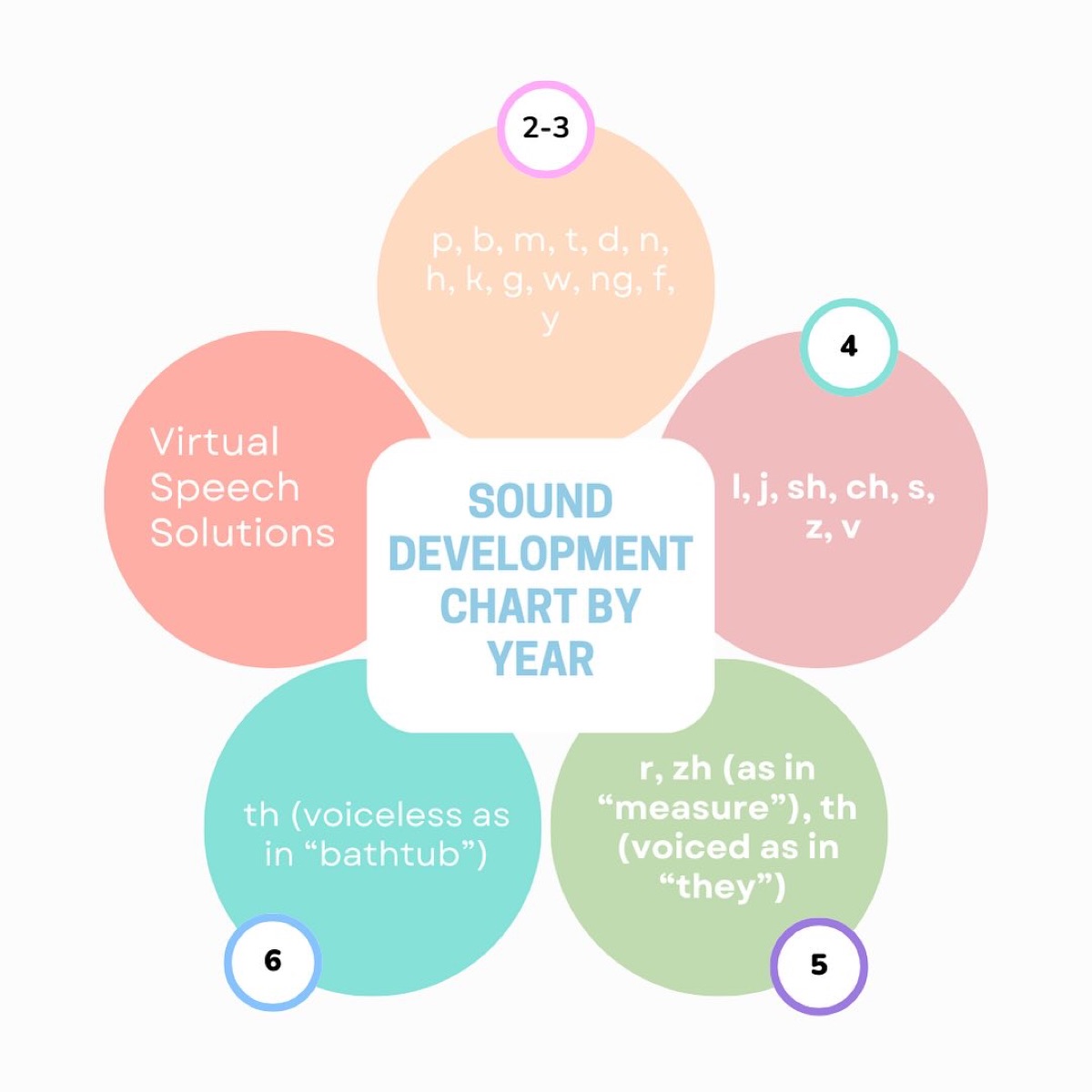
  • Produce most sounds clearly, though r, l, s, th, and blends often remain in progress.

Worth a conversation with an SLP

  • Unfamiliar adults frequently cannot understand them.
  • Cannot answer simple questions about a story or their day.
  • Sentences remain short, or grammar is markedly behind peers.
  • Noticeable stuttering that is worsening, lasting longer than six months, or accompanied by visible tension or avoidance.

By age 5

What most 5-year-olds can do

  • Speak in full, mostly grammatical sentences.
  • Tell a connected story with a beginning, middle, and end.
  • Follow multi-step directions.
  • Be understood by everyone, with r, th, and some blends still developing.
  • Begin rhyming and identifying starting sounds, the foundations of early literacy.

Worth a conversation with an SLP

  • Speech is still difficult for unfamiliar listeners to understand.
  • Struggles to retell events or follow classroom directions.
  • Has difficulty with rhyming or sound awareness, which can signal later reading difficulty.
  • Avoids speaking in group settings because of how they sound.

Signs that warrant attention at any age

A few patterns matter regardless of age:

  • Loss of skills. Any regression in speech, language, or social engagement should be evaluated promptly.
  • No response to sound. Hearing should be checked first. It underlies much of speech development.
  • Feeding or swallowing difficulty. Persistent coughing, choking, or extreme food selectivity.
  • Your own persistent concern. Parents are usually right that something is different, even when they cannot name it.

Why waiting is rarely the better option

“He’ll grow out of it” is sometimes true. The difficulty is that there is no reliable way to know in advance which children will and which will not, and the window where intervention is most efficient is early. An evaluation is not a commitment to therapy. It is information.

Next steps

If something here matched what you are seeing, an evaluation will tell you far more than another few months of watching. For a fuller picture of what to look for, read our guide to signs your child may need speech therapy, or see what to expect from speech therapy in Murrieta and Temecula.

Virtual Speech Solutions provides evaluations and therapy in our Murrieta clinic and via teletherapy across California, serving families in Temecula, Menifee, and throughout Southwest Riverside County. Contact us or call (951) 223-5435 to schedule a consultation.

Speech Therapy in Murrieta & Temecula: What Parents Should Know Before Getting Started

If you have been searching for speech therapy near me in Murrieta, Temecula, or Menifee, you have probably found a long list of names and very little explanation of what actually happens once you call. This guide walks through what speech therapy looks like in practice, who benefits from it, and how families across Southwest Riverside County get started.

What speech therapy actually is

Speech-language pathology covers far more than pronunciation. A licensed speech-language pathologist (SLP) works with:

  • Articulation and phonology: how clearly sounds and words are produced.
  • Expressive language: putting thoughts into words, sentences, and conversation.
  • Receptive language: understanding what others say.
  • Fluency: stuttering and the rhythm of speech.
  • Social communication: conversation, turn-taking, and reading social cues.
  • Feeding and swallowing: safe, comfortable eating and drinking.
  • Voice and resonance: vocal quality, loudness, and strain.

Adults are served too. Communication changes after a stroke, a Parkinson’s diagnosis, a brain injury, or a progressive condition all fall within an SLP’s scope. If that is your situation, see our guide to speech therapy for adults.

Who benefits

Families usually reach out for one of a few reasons. A toddler is not talking as much as siblings did at the same age. A preschooler is hard for people outside the family to understand. A school-age child is struggling to follow directions or retell a story. An adult is finding words harder to retrieve than they used to be.

You do not need a diagnosis, a referral, or certainty that something is wrong before you call. One of the most common things we hear from parents is that they waited because someone told them to. If you are weighing whether it is time, our guide on signs a child may need speech therapy lays out what to look for, and the age-by-age milestone guide gives you concrete benchmarks.

What the first few visits look like

1. The initial conversation

A short call to talk about what you are noticing, your child’s history, and what you are hoping for. This is also where practical questions get answered: scheduling, location, and how billing works.

2. The evaluation

A comprehensive evaluation usually combines standardized testing, structured play or conversation, parent interview, and observation. For children, much of it looks like playing. The result is a clear picture of which areas are on track and which are not, compared to age expectations.

3. The plan

If therapy is recommended, you get goals written in plain language, a suggested session frequency, and an explanation of how progress will be measured. If therapy is not recommended, a good SLP will tell you that too, and explain what to watch for.

4. Ongoing sessions

Sessions are typically 30 to 60 minutes, weekly or twice weekly. For children, the work is play-based and targeted. Carryover at home matters as much as the session itself, so you should expect to leave each visit knowing what to practice.

Serving Murrieta, Temecula, Menifee and the surrounding area

Virtual Speech Solutions provides in-clinic care from our Murrieta location and teletherapy throughout California. For families in Temecula, Menifee, Wildomar, Lake Elsinore, and the wider Southwest Riverside County area, that combination matters more than it sounds. The I-15 corridor at 4pm can turn a fifteen-mile drive into a forty-minute one, and a missed session is a missed session.

Many families use a hybrid pattern: in-clinic when it is valuable to be in the room, teletherapy when the week is tight. If you are weighing the two, we compare them honestly in online vs. in-person speech therapy.

Paying for therapy

Coverage varies widely between plans, and the only reliable answer comes from your own benefits. Broadly, families access speech therapy through private insurance, private pay, or school-based services, and some plans reimburse out-of-network care. We walk through the questions worth asking in does insurance cover speech therapy in California. Always verify your individual benefits before assuming either way.

If your child receives school services

School-based speech services and private therapy are not the same thing, and they are not mutually exclusive. School services address communication needs that affect access to education, under an IEP. Private therapy can be broader. If you disagree with a district’s evaluation, California families have the right to request an Independent Educational Evaluation. We conduct IEEs with no district affiliation.

Getting started

The most useful thing you can do is stop waiting for certainty. An evaluation either identifies something worth addressing, in which case early action helps, or it gives you a documented baseline and peace of mind.

To schedule a consultation with Virtual Speech Solutions, contact our team or call (951) 223-5435. We serve families in Murrieta, Temecula, Menifee and across Southwest Riverside County, in our clinic and through teletherapy statewide. You can also read more about our clinic services for children and adults.

10 Signs Your Child May Need Speech Therapy

Most parents who call us start the same way: “It’s probably nothing, but…” That instinct is worth listening to. Below are ten signs that a speech-language evaluation is worth scheduling, not ten signs that something is wrong.

1. Very few words by age two

By around two, most children use at least 50 words and have started combining them. A much smaller vocabulary, or no two-word phrases, is the most common reason for an early referral.

2. Strangers cannot understand them

Familiar adults decode a lot through context. A useful test is whether someone outside the household understands your child. By three, unfamiliar listeners should understand roughly three-quarters of what a child says; by four, nearly all of it.

3. They understand far more than they say

A child who follows directions well but barely speaks may have a gap between receptive and expressive language. This is common and treatable. We explain it in “my child understands everything but isn’t talking”.

4. Skills have gone backwards

Any loss of words, gestures, or social engagement that a child previously had should be evaluated promptly, at any age. This is the one sign on this list that is genuinely time-sensitive.

5. Frustration around communication

Meltdowns that cluster around not being understood, rather than around tiredness or transitions, often point to a communication bottleneck rather than a behavioral one.

6. Stuttering that is not settling

Brief periods of disfluency are normal in preschoolers. Worth evaluating: stuttering lasting more than six months, worsening over time, or accompanied by visible tension, blocking, or avoiding words.

7. Difficulty following directions

By three, most children manage two-step directions. Persistent difficulty may reflect a receptive language difficulty, or hearing. Both are worth ruling out.

8. Sound errors past the expected age

Sounds develop on a schedule. Early sounds like p, b, m, and t should be solid by three. Later ones (r, l, s, th) can reasonably still be developing at five or six.

9. Limited social communication

Little eye contact, not responding to their name, limited pointing or showing, or minimal interest in interaction are worth discussing with both your pediatrician and an SLP.

10. Feeding or swallowing difficulty

Persistent coughing or choking during meals, extreme food selectivity, or difficulty moving from purees to textures fall within an SLP’s scope and are frequently overlooked.

What an evaluation actually involves

A comprehensive evaluation combines standardized testing, play-based observation, and a detailed conversation with you. For young children it mostly looks like playing. You leave with a clear picture of which skills are age-appropriate and which are not, and a recommendation, which is sometimes simply “keep an eye on this.”

For concrete age-by-age benchmarks, see our speech and language milestones guide. For what therapy looks like locally, see speech therapy in Murrieta and Temecula.

Talk to someone

If you have been going back and forth on this for a while, that is usually its own answer. Virtual Speech Solutions offers evaluations at our Murrieta clinic and by teletherapy across California, serving Temecula, Menifee, and Southwest Riverside County. Contact us or call (951) 223-5435.

Request an Appointment

Private Practice: for families and individuals.

    “Please do not include medical, diagnostic, or other sensitive health information in this form. Our team will contact you to complete the appropriate intake paperwork securely.”

      “Please do not include medical, diagnostic, or other sensitive health information in this form. Our team will contact you to complete the appropriate intake paperwork securely.”

        “Please do not include medical, diagnostic, or other sensitive health information in this form. Our team will contact you to complete the appropriate intake paperwork securely.”

        Partner With VSS

        Contracting & Staffing: for schools and districts.

          “Please do not include medical, diagnostic, or other sensitive health information in this form. Our team will contact you to complete the appropriate intake paperwork securely.”

            “Please do not include medical, diagnostic, or other sensitive health information in this form. Our team will contact you to complete the appropriate intake paperwork securely.”


              “Please do not include medical, diagnostic, or other sensitive health information in this form. Our team will contact you to complete the appropriate intake paperwork securely.”