10 Signs Your Child May Need Speech Therapy

Most parents who call us start the same way: “It’s probably nothing, but…” That instinct is worth listening to. Below are ten signs that a speech-language evaluation is worth scheduling, not ten signs that something is wrong.
1. Very few words by age two
By around two, most children use at least 50 words and have started combining them. A much smaller vocabulary, or no two-word phrases, is the most common reason for an early referral.
2. Strangers cannot understand them
Familiar adults decode a lot through context. A useful test is whether someone outside the household understands your child. By three, unfamiliar listeners should understand roughly three-quarters of what a child says; by four, nearly all of it.
3. They understand far more than they say
A child who follows directions well but barely speaks may have a gap between receptive and expressive language. This is common and treatable. We explain it in “my child understands everything but isn’t talking”.
4. Skills have gone backwards
Any loss of words, gestures, or social engagement that a child previously had should be evaluated promptly, at any age. This is the one sign on this list that is genuinely time-sensitive.
5. Frustration around communication
Meltdowns that cluster around not being understood, rather than around tiredness or transitions, often point to a communication bottleneck rather than a behavioral one.
6. Stuttering that is not settling
Brief periods of disfluency are normal in preschoolers. Worth evaluating: stuttering lasting more than six months, worsening over time, or accompanied by visible tension, blocking, or avoiding words.
7. Difficulty following directions
By three, most children manage two-step directions. Persistent difficulty may reflect a receptive language difficulty, or hearing. Both are worth ruling out.
8. Sound errors past the expected age
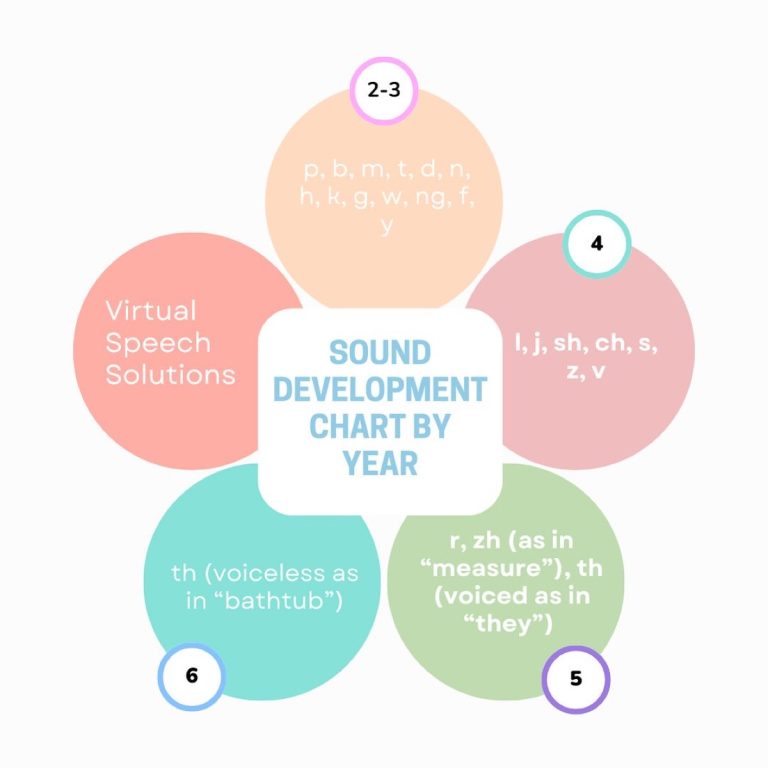
Sounds develop on a schedule. Early sounds like p, b, m, and t should be solid by three. Later ones (r, l, s, th) can reasonably still be developing at five or six.
9. Limited social communication
Little eye contact, not responding to their name, limited pointing or showing, or minimal interest in interaction are worth discussing with both your pediatrician and an SLP.
10. Feeding or swallowing difficulty
Persistent coughing or choking during meals, extreme food selectivity, or difficulty moving from purees to textures fall within an SLP’s scope and are frequently overlooked.
What an evaluation actually involves
A comprehensive evaluation combines standardized testing, play-based observation, and a detailed conversation with you. For young children it mostly looks like playing. You leave with a clear picture of which skills are age-appropriate and which are not, and a recommendation, which is sometimes simply “keep an eye on this.”
For concrete age-by-age benchmarks, see our speech and language milestones guide. For what therapy looks like locally, see speech therapy in Murrieta and Temecula.
Talk to someone
If you have been going back and forth on this for a while, that is usually its own answer. Virtual Speech Solutions offers evaluations at our Murrieta clinic and by teletherapy across California, serving Temecula, Menifee, and Southwest Riverside County. Contact us or call (951) 223-5435.