Speech & Language Milestones: What 2-, 3-, 4- and 5-Year-Olds Should Be Able to Say
“Is that normal for her age?” is the question behind almost every call we get from parents. This guide lays out what most children can do at two, three, four, and five years old, and which patterns are worth having looked at.
One caveat first, and it matters: milestones describe typical ranges, not deadlines. Children vary enormously, and a child can sit slightly behind on one skill while being ahead on others. What tends to warrant attention is a pattern: several skills clustered behind, or a skill that was there and disappeared.
By age 2
What most 2-year-olds can do
- Use at least 50 words, and often many more.
- Begin combining two words: “more milk,” “daddy go,” “big truck.”
- Follow simple one-step directions without gestures: “get your shoes.”
- Point to familiar objects or body parts when named.
- Be understood by a familiar adult roughly half the time.
Worth a conversation with an SLP
- Fewer than 50 words, or no two-word combinations.
- Relies mainly on pointing and gesture instead of words.
- Does not respond to their name consistently.
- Has lost words they previously used.
The “fewer than 50 words at two” pattern is where the term late talker comes up. It does not automatically mean a disorder, but it is the single most common reason for an early evaluation. We cover the distinction in late talker or speech delay.
By age 3
What most 3-year-olds can do
- Speak in three- to four-word sentences.
- Ask simple questions: “where daddy go?”
- Follow two-step directions: “get your cup and put it on the table.”
- Use pronouns, plurals, and simple past tense, imperfectly.
- Be understood by unfamiliar listeners roughly three-quarters of the time.
- Name most common objects.
Worth a conversation with an SLP
- Still speaking mostly in single words.
- Strangers rarely understand them.
- Cannot follow two-step directions.
- Frequent frustration or meltdowns tied to not being understood.
By age 4
What most 4-year-olds can do
- Use sentences of four to five words or more, with mostly correct grammar.
- Tell a short story or recount part of their day in sequence.
- Answer “who,” “what,” “where,” and simple “why” questions.
- Be understood by unfamiliar listeners nearly all of the time, even with some sound errors.
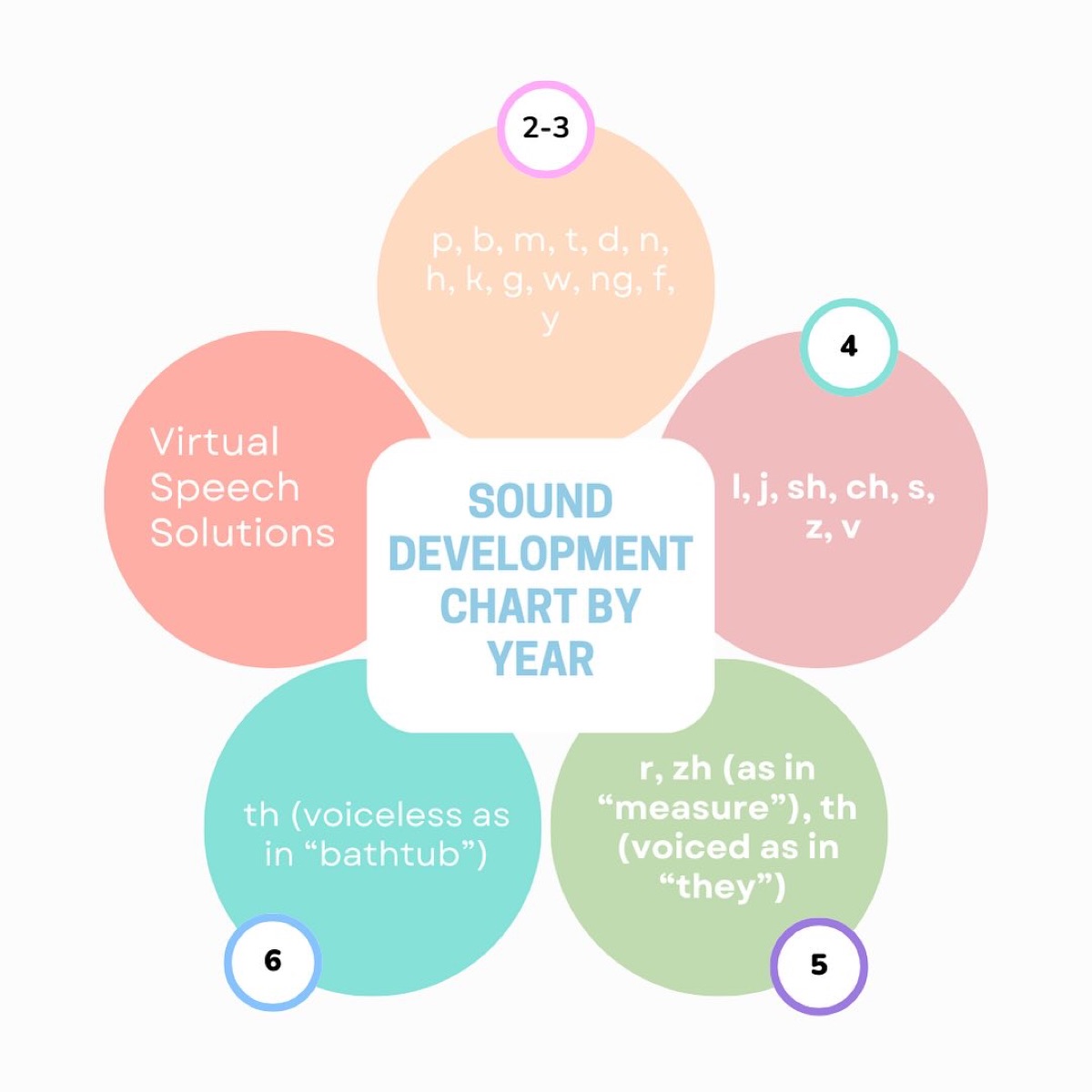
- Produce most sounds clearly, though r, l, s, th, and blends often remain in progress.
Worth a conversation with an SLP
- Unfamiliar adults frequently cannot understand them.
- Cannot answer simple questions about a story or their day.
- Sentences remain short, or grammar is markedly behind peers.
- Noticeable stuttering that is worsening, lasting longer than six months, or accompanied by visible tension or avoidance.
By age 5
What most 5-year-olds can do
- Speak in full, mostly grammatical sentences.
- Tell a connected story with a beginning, middle, and end.
- Follow multi-step directions.
- Be understood by everyone, with r, th, and some blends still developing.
- Begin rhyming and identifying starting sounds, the foundations of early literacy.
Worth a conversation with an SLP
- Speech is still difficult for unfamiliar listeners to understand.
- Struggles to retell events or follow classroom directions.
- Has difficulty with rhyming or sound awareness, which can signal later reading difficulty.
- Avoids speaking in group settings because of how they sound.
Signs that warrant attention at any age
A few patterns matter regardless of age:
- Loss of skills. Any regression in speech, language, or social engagement should be evaluated promptly.
- No response to sound. Hearing should be checked first. It underlies much of speech development.
- Feeding or swallowing difficulty. Persistent coughing, choking, or extreme food selectivity.
- Your own persistent concern. Parents are usually right that something is different, even when they cannot name it.
Why waiting is rarely the better option
“He’ll grow out of it” is sometimes true. The difficulty is that there is no reliable way to know in advance which children will and which will not, and the window where intervention is most efficient is early. An evaluation is not a commitment to therapy. It is information.
Next steps
If something here matched what you are seeing, an evaluation will tell you far more than another few months of watching. For a fuller picture of what to look for, read our guide to signs your child may need speech therapy, or see what to expect from speech therapy in Murrieta and Temecula.
Virtual Speech Solutions provides evaluations and therapy in our Murrieta clinic and via teletherapy across California, serving families in Temecula, Menifee, and throughout Southwest Riverside County. Contact us or call (951) 223-5435 to schedule a consultation.