“My Child Understands Everything but Isn’t Talking”: Should I Be Concerned?
It is one of the most common things parents tell us: “She understands everything I say. She just doesn’t talk.” Usually the observation is accurate, and it is genuinely useful diagnostic information.
Receptive and expressive language are different systems
Receptive language is understanding: following directions, recognizing words, responding appropriately. Expressive language is production: words, sentences, and conversation.
Comprehension typically runs ahead of production in every child. Adults learning a second language experience the same thing. You understand a film before you can hold the conversation. So a gap is normal. The question is how wide it is.
When the gap is worth evaluating
An expressive language delay describes a child whose understanding is age-appropriate while their spoken output is meaningfully behind. Signs that the gap has grown beyond typical variation:
- Fewer than 50 words at age two, or no two-word combinations.
- Communicating mainly through pointing, pulling, or leading you by the hand.
- Visible frustration when they cannot get a message across.
- A widening gap over time rather than a narrowing one.
The last point matters most. A child who is slowly closing the distance is on a different trajectory from one who is falling further behind.
Why strong comprehension is good news
Intact receptive language is a genuinely encouraging sign. It suggests hearing, attention, and the underlying language system are doing their job, and that the difficulty sits in retrieval and production. Children in this profile often respond well to targeted intervention.
What else might be going on
Several things can produce this picture, and an evaluation distinguishes between them:
- Late talking: a slower start with a typical profile otherwise. See late talker or speech delay.
- Childhood apraxia of speech: difficulty planning the movements for speech, rather than not knowing the words.
- Expressive language disorder: a persistent difficulty with producing language.
- Hearing changes, including intermittent loss from fluid, which is easy to miss.
- Selective mutism: a child who speaks freely at home but not elsewhere.
These call for different approaches, which is precisely why “wait and see” is hard to do well without information.
What helps at home
None of this replaces an evaluation, but it helps:
- Pause longer. Give five to ten seconds after asking. Many children are still assembling a response when we fill the silence.
- Narrate. Describe what you are both doing, without requiring a response.
- Offer choices. “Milk or water?” is easier to answer than “what do you want?”
- Expand. When they say “car,” you say “big red car.” One step beyond where they are.
- Resist testing. “Say car. Say it. Say car.” tends to shut things down rather than open them.
Getting clarity
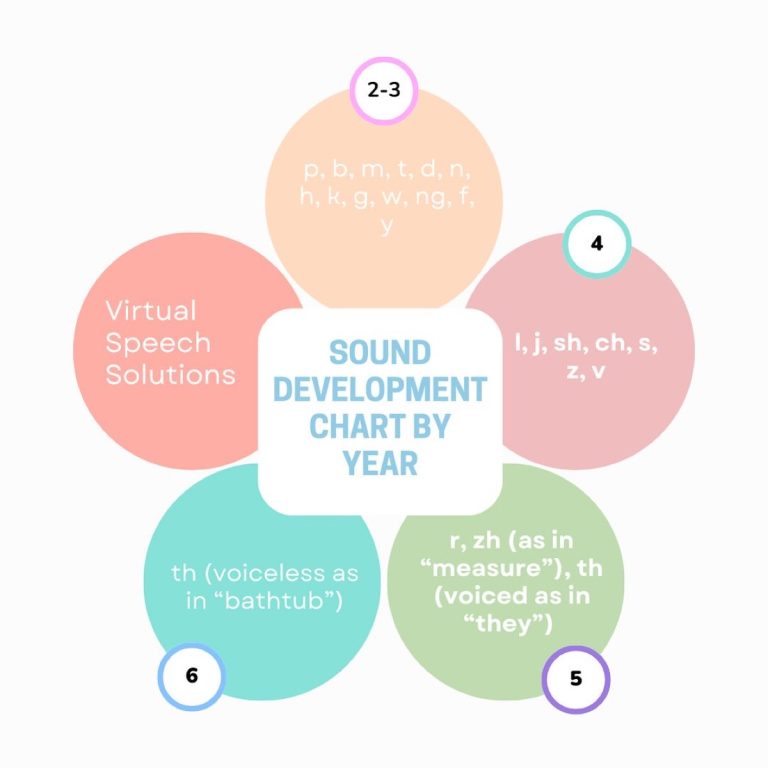
An evaluation measures receptive and expressive language separately, which turns “she understands but doesn’t talk” into an actual profile with numbers attached, and a recommendation. Our milestone guide gives benchmarks in the meantime.
Virtual Speech Solutions evaluates and treats expressive language delays at our Murrieta clinic and via teletherapy statewide, serving Temecula, Menifee, and Southwest Riverside County families. Contact us or call (951) 223-5435.